>>

A deeply flavored, tender pot roast braised in red wine and beef stock until fork-tender, finished with carrots, onions, and fresh herbs — a true weeknight-to-holiday favorite.
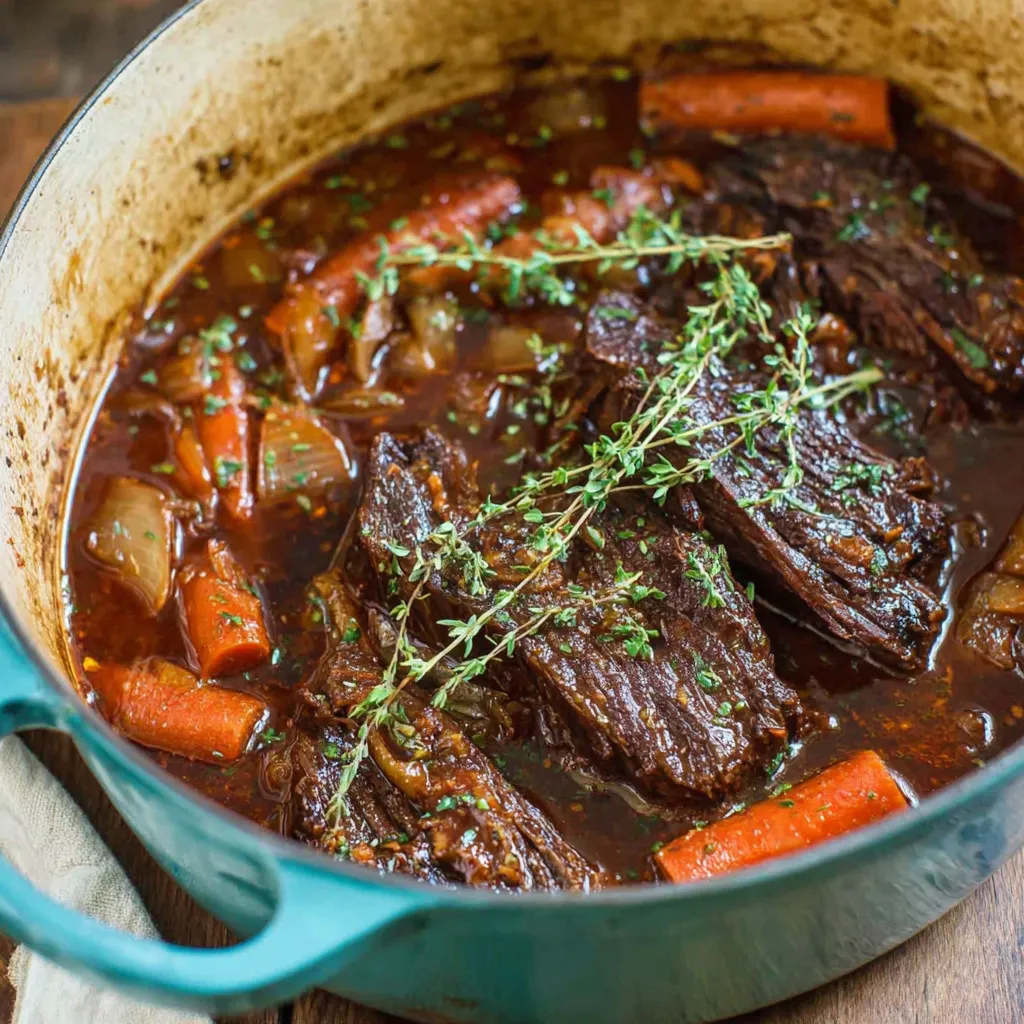
This classic pot roast has been my go-to comfort dinner for cold evenings and family gatherings for years. I first learned this combination of red wine, tomato paste, and a long, slow braise during a rainy weekend when I wanted something that would fill the house with savory aromas and feed a crowd without fuss. The result is a deeply flavored roast with meat that pulls apart with the gentlest fork pressure and a glossy, rich jus that begs for mashed potatoes or crusty bread. It’s both humble and celebratory — perfect for a Sunday dinner or a special occasion.
I love how forgiving this method is: a 4–5 pound beef chuck becomes meltingly tender after several hours in a covered pot, while carrots and onions become sweet and luxurious. The scent of thyme and bay leaves mingled with red wine is one of my favorite kitchen memories. Over the years I’ve adjusted seasonings and timing, learned how to deglaze properly, and discovered that letting the meat rest briefly before shredding preserves juiciness. Serve it to friends and you’ll get the exact reaction I love — slow smiles and second-helping requests.
In my family this roast became the signature dish for cold-weather gatherings; one year I brought it to a small winter potluck and neighbors asked for the recipe. The combination of simple technique and robust flavor consistently wins over picky eaters and veteran home cooks alike.
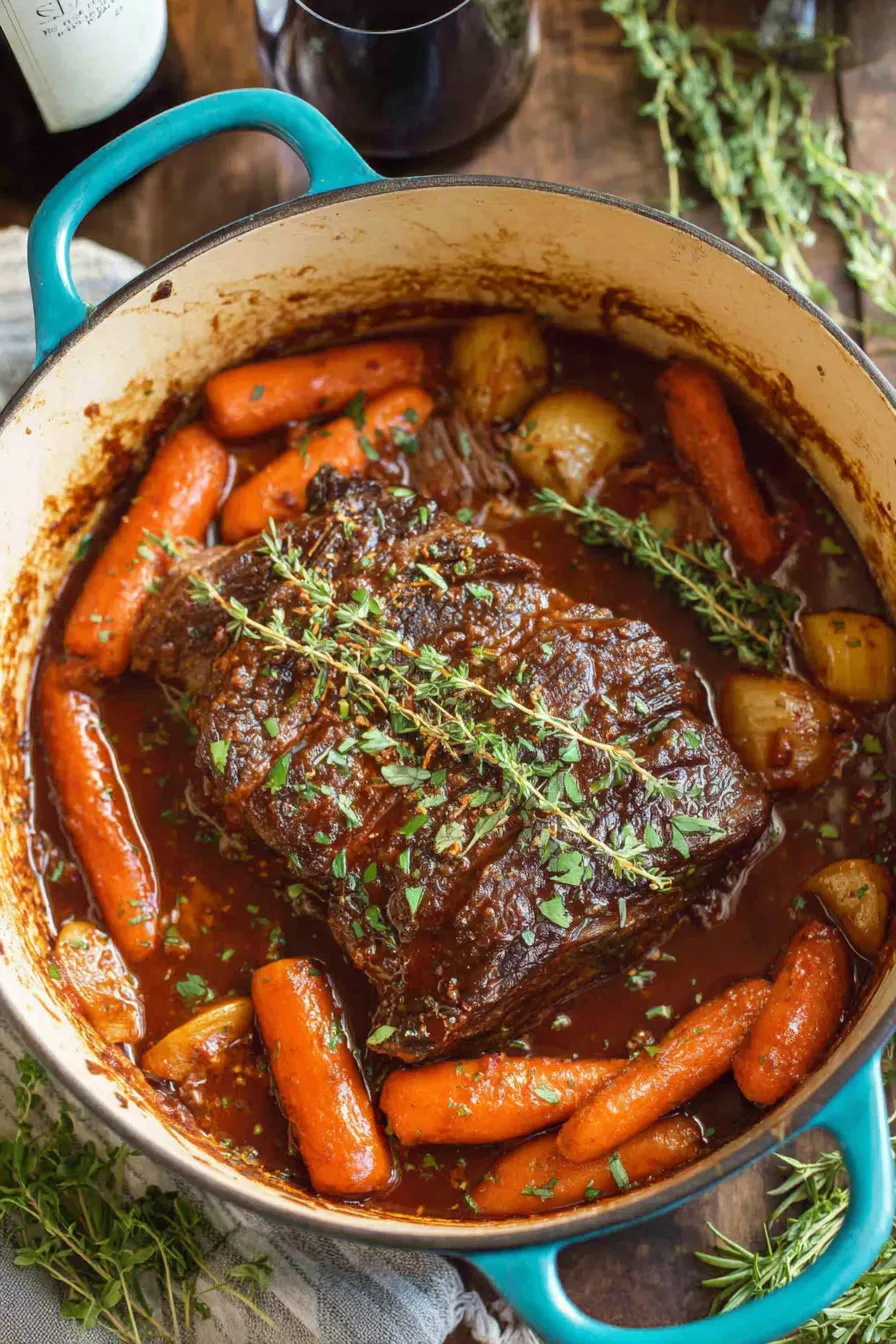
My favorite part is the second-day flavor transformation: cooled and reheated, the sauce deepens in color and taste, and the meat becomes even more tender. It’s reliably comforting and versatile enough to be the centerpiece for a holiday or a simple family dinner.
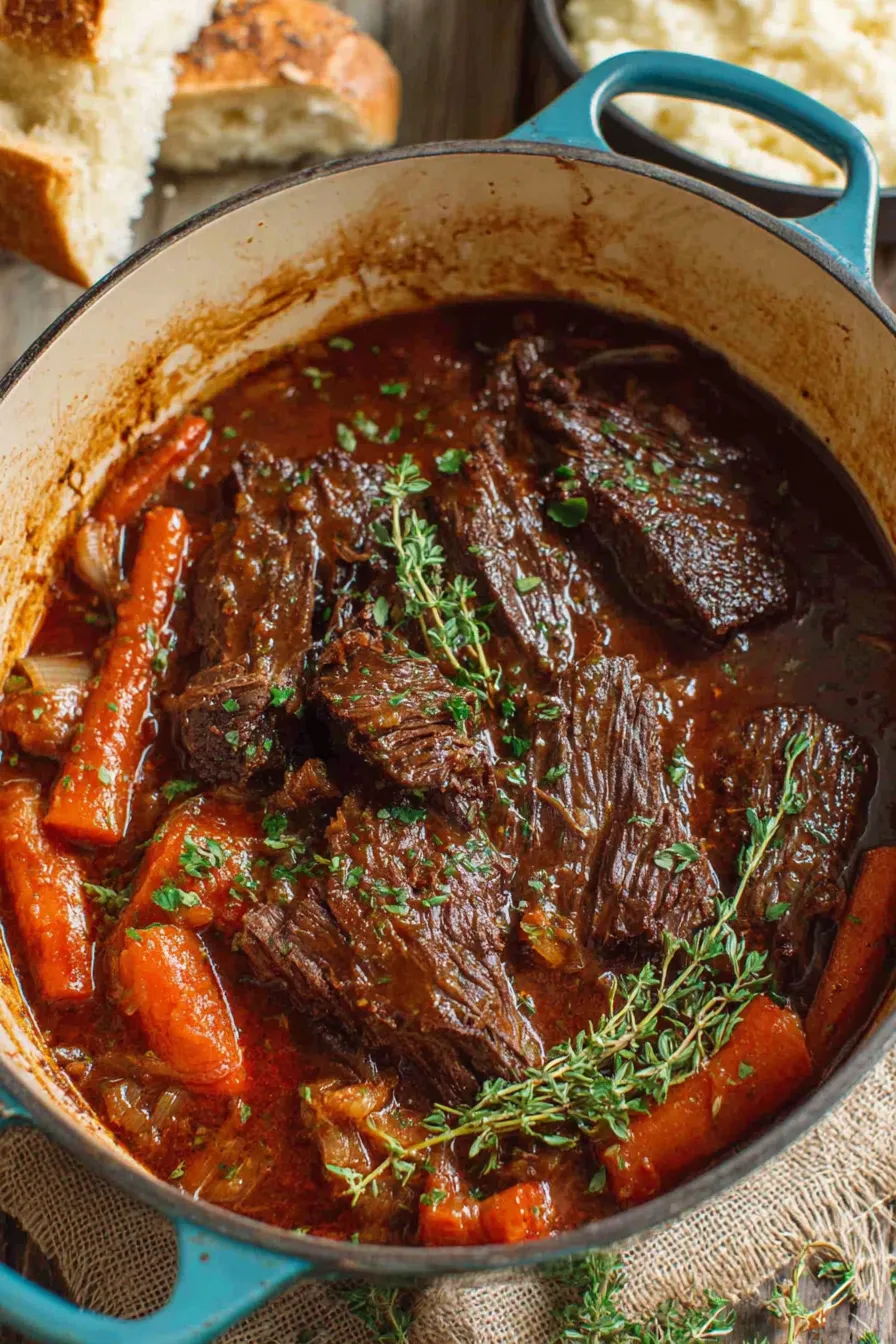
Cool the meat and sauce to near room temperature within two hours, then refrigerate in shallow airtight containers for up to 3–4 days. For longer storage, freeze portions in freezer-safe bags or rigid containers for up to 3 months; remove as much air as possible to prevent freezer burn. To reheat, thaw overnight in the refrigerator, then warm gently in a covered pot with a splash of stock to loosen the sauce, or reheat in a low oven at 300°F until heated through. If the sauce has solidified in the fridge, whisk in a little warm stock or water and simmer for a few minutes to restore glossiness.
If you don’t have red wine, substitute an equal amount of additional beef stock plus 1 Tbsp red wine vinegar for acidity. Use chicken stock only in a pinch — the final flavor will be lighter. Swap thyme for rosemary for a woodier aroma, or add a tablespoon of Worcestershire sauce for extra umami. For a gluten-free option, use cornstarch to thicken; for a richer finish, make a beurre manié with butter and flour. If chuck isn’t available, a boneless brisket or shoulder roast yields similar results but may require slight adjustments in braising time.
Serve the shredded meat over creamy mashed potatoes, polenta, or buttered egg noodles to soak up the sauce. Add a side of roasted root vegetables or a crisp green salad to balance richness. For a casual meal, pile the meat into toasted rolls for hearty sandwiches topped with pickles and horseradish. Garnish each plate with chopped parsley and a grind of fresh black pepper to brighten flavors and add color contrast.
Slow-braised beef has a long history across many cuisines as a method to transform inexpensive, tough cuts into tender, flavor-packed meals. The combination of wine, aromatics, and long cooking is rooted in European braising traditions — French pot roast (rôti or bœuf braisé) and Italian brasato share similar techniques. This specific style, with tomato paste and a cup of red wine, blends rustic home-cooking sensibilities with the deeper, acidic notes modern cooks favor.
In winter, increase root vegetables — add parsnips and turnips — for heartier braises. In spring, finish with a handful of fresh peas stirred in at the end for brightness. Swap carrots for roasted baby carrots in the fall to emphasize earthier flavors. For holiday service, surround the roast with roasted shallots and pearl onions and add a splash of fortified wine like Madeira to the braising liquid for a festive depth.
Make this pot roast two days ahead: prepare and refrigerate; reheat gently on the stovetop and shred just before serving for the freshest texture. Portion meat and sauce into meal-sized containers for weeknight dinners. Freeze shredded meat with some jus in single servings, then thaw and toss with warmed sauce, adding quick-cooked veggies for a complete meal. Label and date packages to rotate stock easily.
Ultimately, this roast is about patience and reward: a simple technique yields soulful food that brings people together. I encourage you to make it your own — tweak the herbs, choose your favorite wine, and enjoy the slow, satisfying process of braising.
Pat the roast very dry before searing to ensure a deep, browned crust.
Deglaze the pot with wine and scrape the fond — those browned bits are concentrated flavor.
Let the meat rest briefly after braising before shredding to preserve juices.
Use low-sodium stock so you can control final seasoning after reduction.
This nourishing classic pot roast recipe is sure to be a staple in your kitchen. Enjoy every moist, high protein slice — it is perfect for breakfast or as a wholesome snack any time.
Yes — you can substitute a boneless brisket or shoulder roast; braising time may vary and brisket can take a little longer to become tender.
Use cornstarch mixed with cold water or broth (2 Tbsp cornstarch + 2 Tbsp water) and whisk into boiling sauce until thickened.
This Classic Pot Roast recipe makes perfectly juicy, tender, and flavorful steak every time! Serve with potatoes and a side salad for an unforgettable dinner in under 30 minutes.
Pat roast dry and season all over with 3 tsp coarse salt and 1 tsp black pepper. Leave uncovered at room temperature for 1 hour to promote even cooking.
Heat 1 Tbsp oil in a 5–6 qt Dutch oven over medium-high heat. Sear roast 3–4 minutes per side until deep golden brown. Transfer roast to a plate and set aside, leaving fond in the pot.
Reduce heat to medium. Sauté chopped onion 4–5 minutes until golden. Add garlic and cook 30 seconds. Stir in 3 Tbsp tomato paste and cook 2 minutes to deepen flavor.
Pour in 1 cup red wine and scrape up browned bits from the pot. Simmer until about one-quarter of the wine evaporates, roughly 2–3 minutes.
Add 6 cups beef stock, 1 tsp salt, 1/2 tsp pepper, bay leaves, thyme, and half the parsley. Return the roast and tuck carrots around it, then bring to a boil.
Cover and transfer to the lower third of a 325°F oven. Braise for approximately 3–4 hours for a 4 lb roast, or until meat is fork-tender and pulls apart easily.
Remove meat and vegetables to a warm platter and let rest briefly. Shred the roast with two forks and keep warm while you finish the sauce if desired.
Option 1: Whisk 2 Tbsp cornstarch with 2 Tbsp cold water and stir into boiling liquid until thickened. Option 2: Make beurre manié by combining 2 Tbsp butter and 2 Tbsp flour, then whisk a little at a time into boiling sauce until thickened.
Last Step: Please leave a rating and comment letting us know how you liked this recipe! This helps our business to thrive and continue providing free, high-quality recipes for you.
Leave a comment & rating below or tag
@culinya on social media!
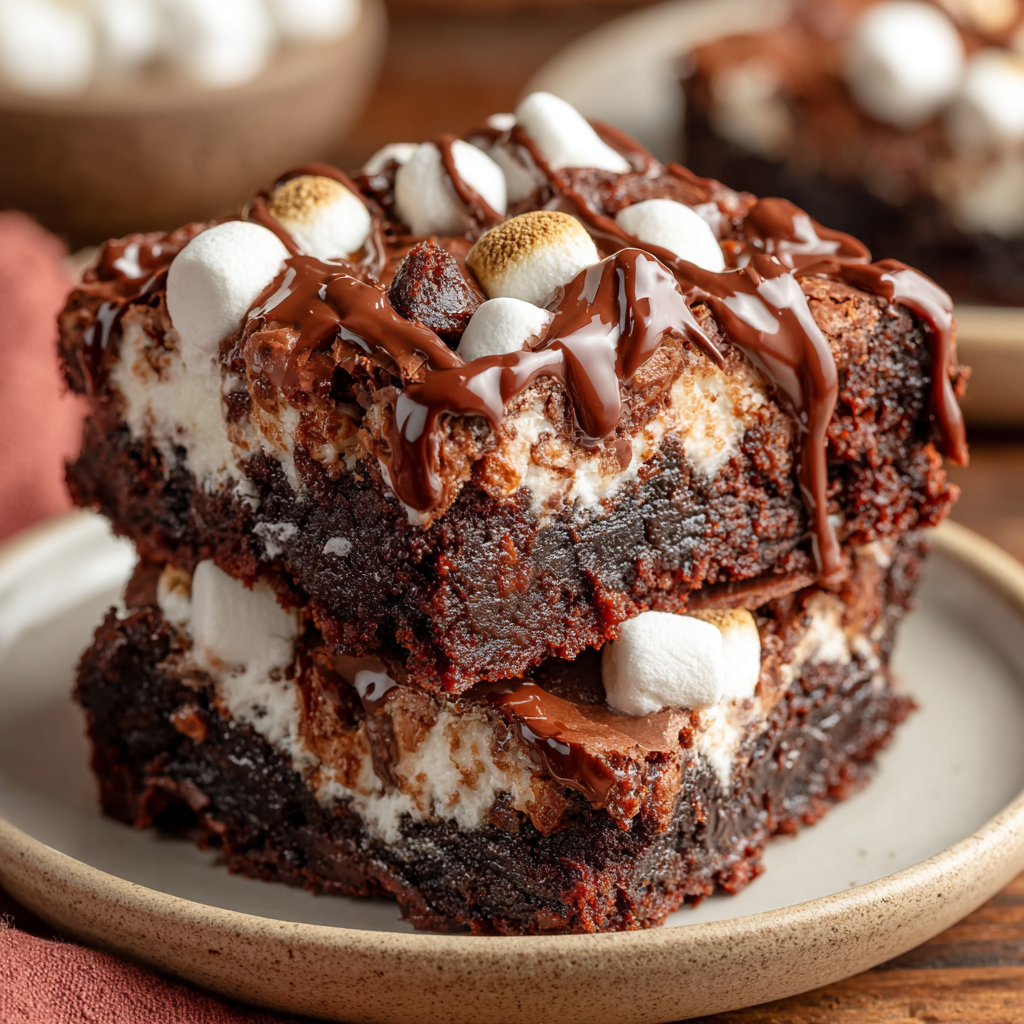
Ultra-fudgy brownies crowned with gooey mini marshmallows and a quick-set chocolate icing. Crowd-pleasing, nostalgic, and irresistibly rich in every bite.
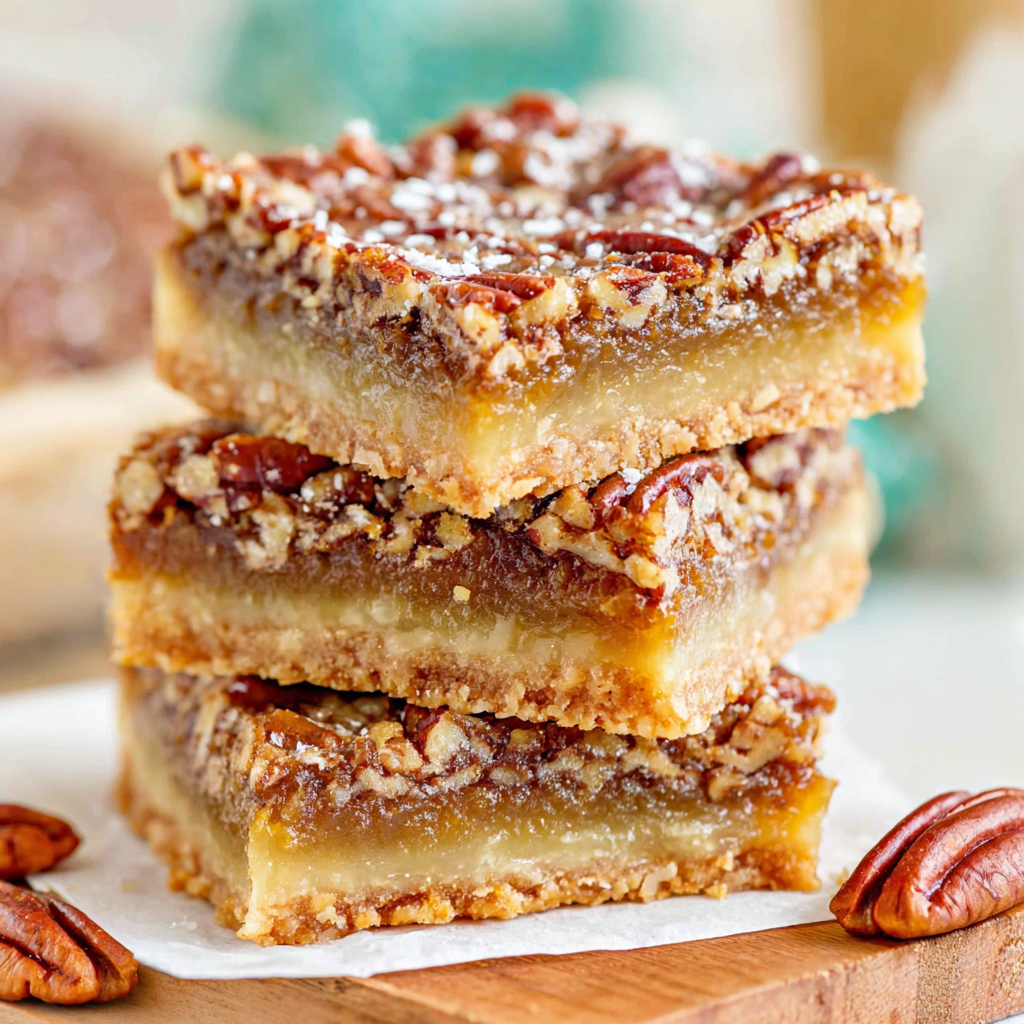
Buttery shortbread crust meets a silky brown sugar pecan topping in these easy pecan pie bars. Just 10 minutes of prep for bakery-level bliss.

A flawlessly smooth pumpkin cheesecake with warm spice, buttery graham crust, and no cracks. Finish with caramel and rum-kissed whipped cream.
Leave a comment & rating below or tag @culinya on social media!
Enjoyed this recipe? Share it with friends and family, and don't forget to leave a review!
This recipe looks amazing! Can't wait to try it.
Comments are stored locally in your browser. Server comments are displayed alongside your local comments.

Join to receive our email series which contains a round-up of some of our quick and easy family favorite recipes.